
Late freeze dates lead to longer allergy season
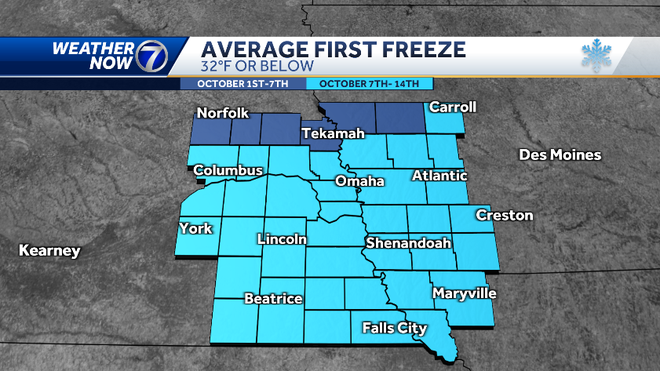
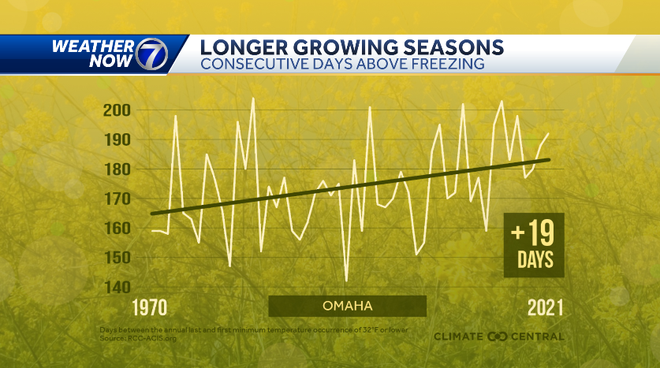
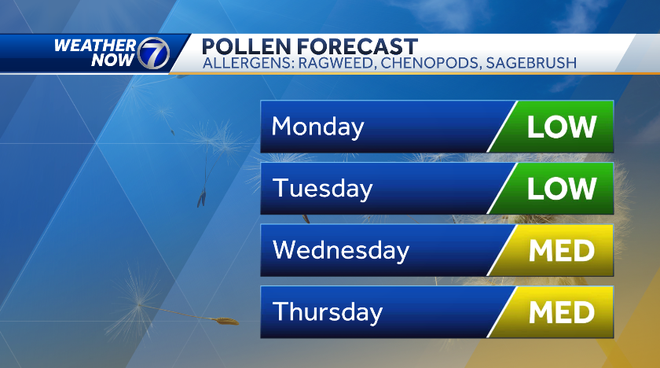
Warm temperatures sooner in spring and later in autumn have prolonged impacts to the health of allergy sufferers. The average date for our first freeze, temperatures at 32° or below, ranges from October 1 to October 7 for our northern-most counties to October 7 to October 14 for much of eastern Nebraska and western Iowa. With the on-going trend of warmer springs and autumns, the growing season is lengthening, leading to longer allergy seasons. From 1970 to 2021, Omaha has seen an average increase of 19 days with temperatures consecutively above freezing from spring to autumn. Though temperatures Monday morning dipped into the 30s for many, growing season is still not quite over for eastern Nebraska and western Iowa. Allergies are forecast to remain low to medium throughout much of the next week.
Warm temperatures sooner in spring and later in autumn have prolonged impacts to the health of allergy sufferers.
The average date for our first freeze, temperatures at 32° or below, ranges from October 1 to October 7 for our northern-most counties to October 7 to October 14 for much of eastern Nebraska and western Iowa.
With the on-going trend of warmer springs and autumns, the growing season is lengthening, leading to longer allergy seasons. From 1970 to 2021, Omaha has seen an average increase of 19 days with temperatures consecutively above freezing from spring to autumn.
Though temperatures Monday morning dipped into the 30s for many, growing season is still not quite over for eastern Nebraska and western Iowa. Allergies are forecast to remain low to medium throughout much of the next week.
Source link