
Are nasal vaccines the key to ending COVID-19?
Existing COVID-19 vaccines can prevent severe disease, but not infection. A new hope comes in the form of needle-free mucosal vaccines.
Article content
When the first COVID-19 vaccines began to roll out in late 2020, they were met with gratitude and hope. To many people, the remarkable production of vaccines less than a year into the deadly global pandemic suggested the end would soon be in sight.
But it wasn’t. Nearly five years later, the global emergency around COVID-19 has ended as have many the public health measures along with the public’s focus, but the pandemic continues. In recent weeks, a wave of infections — driven by newer, highly contagious variants — has spread across Canada and the early fall surge of COVID-19 continues.
Advertisement 2

Article content
Updated mRNA-based COVID-19 vaccines that are a better match for the latest variants are being rolled out, the latest in a series of vaccines that have reduced the most severe acute effects of the virus for many, as well as death rates and hospitalizations.
It is a remarkable achievement that saved lives, but it has not been able to stop the virus from spreading. COVID-19 remains a leading cause of death in Canada. And, as health experts understand more about the long-term damage that can result from the virus, including Long COVID, heart disease, stroke, and dementia, among others, COVID-19 has continued to surprise even those who study it closest.
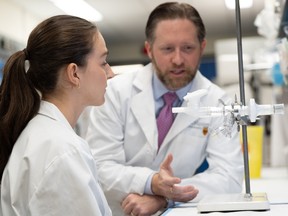
“I think anybody who tells you COVID-19 isn’t a surprise is not being truthful,” said Matthew Miller, who is co-director of the Canadian Pandemic Preparedness Hub, Canada Research Chair in Viral Pandemics and an associate professor in biochemistry at McMaster University in Hamilton. He is part of the research team that is developing an inhaled COVID-19 vaccine.
“I have studied pandemic viruses for a long time. I completely expected we would be in a place by now where COVID-19 was exhibiting seasonal trends (similar to influenza and other seasonal viruses that generally occur in the fall and winter). Clearly I was wrong.
Advertisement 3
Article content
“I don’t think there are many people who in good faith can say that when this was taking off they thought we might still be in the place we are now.”
But amid fatigue, there is a new hope that the end — at least to the pandemic as we know it — might eventually be in sight.
That hope comes in the form of mucosal vaccines — next-generation vaccines that are needle-free and can be sprayed or inhaled. Some see mucosal vaccines as the best hope to end the COVID-19 pandemic. They are now in development in labs around the world, including in Canada. The United States and other countries are investing heavily in the development of mucosal vaccines for COVID-19 and beyond.
Much of the excitement around mucosal vaccines is focused on their potential to stop infections before they take hold by creating a protective immune barrier in the respiratory tract and mucosal system, the entry point for infections. Existing COVID-19 vaccines can prevent severe disease, but not infection.
The team Miller is part of at McMaster is about to begin Phase 2 trials on a COVID-19 vaccine that is inhaled using a device similar to an asthma inhaler. It is the most promising mucosal COVID-19 vaccine under development in Canada and is expected to be tested in Canadian cities, including Ottawa, next year. The platform used for the COVID-19 vaccine can be used against other illnesses as well.

Evening Update
Article content
Advertisement 4
Article content
“I think we need mucosal vaccines generally. I think we are going to see a future with mucosal vaccines, and they have a whole variety of possible indications beyond COVID,” Miller said. “Our propensity to stick (vaccines) into peoples’ arms is more out of habit than anything else.”
But Miller and others warn that expectations should be tempered for just how much, and how quickly, mucosal vaccines can make a difference.
Still, many people have high hopes.
Just last month, early, promising data from a mucosal vaccine being developed in China created a buzz. In the midst of early-stage testing of the vaccine, China lifted its highly restrictive Zero COVID policy, resulting in a massive wave. Still, more than 86 per cent of people who had two doses of the experimental vaccine remained uninfected. The vaccine is still undergoing testing.
“This is what I’ve been waiting for. It could finally give us a real ending to the pandemic,” Toronto emergency physician Dr. Kashif Pirzada wrote on the social media platform X in response to the results of a study on the Chinese vaccine. “No more waves of illness, no more rushing for tests and antivirals if you’re elderly or vulnerable. Hope this comes out soon!”
Advertisement 5
Article content
Pirzada is a board member of the national non-profit Canadian Covid Society, which was founded, in part, to fill information gaps after public health pulled back on public awareness campaigns and preventative measures.
University of Ottawa professor Dr. Marc-André Langlois, whose lab has also worked on a mucosal vaccine for COVID-19, said the world had been fortunate to have vaccines that could be deployed rapidly during the early months of the pandemic. “They worked very well to reduce severe disease symptoms in those who got infected. The key point, though, is they worked in those who got infected.”
The advantage of mucosal vaccines, he said, is the possibility that “you don’t get infected.” Langlois envisages a future in which mucosal vaccines could be sold off the shelf in pharmacies and easily administered at home.
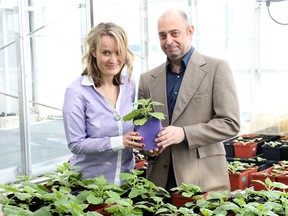
Langlois knows the subject well: A molecular virologist with a background in immunology who is executive director of the national Coronavirus Variants Rapid Response Network, his work focused on HIV until the pandemic hit. He re-tooled his lab to work on COVID-19, including the development of a plant-based nasal spray vaccine.
Advertisement 6
Article content
But that project, which began in June 2021, is being shelved after funding ended. He calls the lack of federal government interest in the project and other pandemic-related work discouraging and short-sighted, especially since the potential of mucosal vaccines — for COVID-19 and beyond — is huge.
“They are the key to stopping transmission, and really that is what we want, to completely prevent infection. The research will be applied to influenza and other respiratory viruses as well,” he said.
Miller and the team at McMaster were already working on an inhaled vaccine for tuberculosis when the pandemic hit. With pandemic funding, they pivoted to work on a mucosal COVID-19 vaccine.
The researchers recognized that all the vaccines being developed by major pharmaceutical companies at the beginning of the pandemic were unlikely to end the pandemic. They all focused on the spike protein in SARS-CoV-2, the virus that causes COVID-19. That spike protein mutates quickly, which is why vaccines need to be updated and boosted frequently to protect against new strains.
Advertisement 7
Article content
The mucosal vaccine being tested in Miller’s lab focuses on other parts of the virus, in addition to spike protein, which will hopefully reduce, or end, the need for frequent vaccinations.
“The whole point of our vaccine was to get away from the need for constant boosters and chasing variants. That is what we are shooting for.”
Their vaccine uses the same viral vector — adenovirus — to prime an immune response as was used in several injected COVID-19 vaccines associated with a higher risk of rare but potentially dangerous clotting (known as vaccine-induced immune thrombotic thrombocytopenia or VITT). Health Canada suspended use of the AstraZeneca-Oxford vaccine in people under 55, Janssen withdrew its vaccine.
Miller noted that the scientific community does not fully understand why VITT happens in rare cases, “but it seems as though ‘leakage’ of the adenovirus vaccine into the bloodstream when it is injected may be responsible. Because our vaccine is inhaled and non-replicating, it only ever reaches (the lungs) and as far as we know does not reach the bloodstream. This is a key difference that we think will overcome the important safety concern around VITT.”
Advertisement 8
Article content
He said there were no “worrisome safety signals” detected in the relatively small Phase 1 study, and it will continue to be monitored closely.
The urgency of the pandemic expedited research on inhaled vaccines “that may benefit humanity far beyond the pandemic,” Miller wrote. Early research in animals suggested the inhaled COVID-19 vaccine currently being tested “will last longer, be more effective and stand up well to future variants of the COVID-19 virus.”
Miller is cautious, though, about broader hopes that mucosal vaccines will offer complete so-called “sterilizing immunity” — an end to infections.
“I think it is important to give the public realistic expectations,” he said. “They are not going to be perfect.”
He is far from alone in his caution. A recent article in the journal eBio Medicine titled “Mucosal vaccines for SARS-CoV-2: triumph of hope over experience,” argued that more work needs to be done on the vaccines. Its authors noted that mucosal vaccines are known for being safe, easy to administer and cost-effective, but proof that they offer better mucosal immunity (than current vaccines) and prevent infection and transmission “remains elusive.”
Advertisement 9
Article content
Miller says the virus that causes COVID-19 is unlikely to disappear completely. “This virus is just too good at spreading.”
But it is likely the virus will begin to exhibit more predictable seasonal circulation patterns, similar to influenza, RSV and the common cold, which are also coronaviruses.
“That, I think, is possible,” Miller said.
“Settling into a place where COVID behaves much more like a common cold virus would be a huge step in the right direction.”
Article content
Source link