
How I learned to cope with my fear of death.
I used to think I had a decent relationship with death. Or at least, it didn’t register in my anxiety’s greatest hits. But when the pandemic hit and death was suddenly everywhere, when it awaited all of us in an unsettlingly immediate way, I became obsessed with chicken breasts.
The quantity of poultry I could stuff into my freezer was directly proportional to how safe I felt, a kind of buffer against illness and death. Why? Who knows. I needed to find a way to control this uncontrollable, existential threat, and my brain decided to hoard bird flesh. At least it was somewhat practical and made meal-planning easier, but the approach had its limits. For instance, any time I pulled one out of the freezer, I would burst into tears. Not ideal for someone who eats a lot of chicken.
And if the global miasma of death wasn’t enough, in October 2020, my mother-in-law, who used a wheelchair and lived alone, had an accident and ended up bedridden in a nursing home. Because of the pandemic, my husband, my sister-in-law, and I could not visit or help or effectively advocate for her care, and by the time we were allowed inside, her physical health had deteriorated profoundly from neglect, lack of centralized communication, and the general chaos that the COVID-19 crisis wrought on an already broken elder care system. She entered a painfully long spiral toward death. There was very little we could do about it.
To cope with this new uncontrollable situation, I became obsessed with cooking dinner (you might be sensing a theme). I had moved past my chicken-specific anxiety only to fixate more generally on food prep. My whole day revolved around planning, shopping, recipe selection, and cooking because I felt that my food choices were what held our lives together.
This wasn’t my first rodeo with death. I had grieved the tragic, untimely deaths of friends and family members, and even survived a dramatic car accident that belonged in a cautionary driver’s ed video, where our car went off a steep embankment and flipped (my friends and I managed to walk away with minor injuries).
But those events were just that—events. Moments to grieve, but still moments. This new threat of death felt more like a narrative shift, grueling and endless. Once death was thrown into my life in a visceral, relentless way, I discovered I was actually pretty bad at dealing with it.
Despite being one of the only truly universal human experiences, death is strangely difficult to understand and accept. For many of us, for most of our lives, death is present only in an abstract way. We know, even as children, that death is a fact of life. But it’s so easy for it to feel like something that happens to other people—preferably people we don’t know. Death can stay safely out of the realm of possibility for us, until, suddenly, it can’t.
Throughout history, humans have developed traditions to toe the tightrope between terror of death and denial of it. It’s been said that in ancient Rome it was the job of an enslaved person to whisper in a general’s ear that victory was fleeting and his own death was inevitable. The traditions of memento mori—Latin for “remember you will die”—are nearly as old as the religion of Christianity. Dutch vanitas paintings from the 17th century prominently featured skulls, rotting fruit, and hourglasses to remind viewers of the fleeting nature of life. And Buddhist traditions have diverse approaches, from meditating on the impermanence of life to literally observing the stages of corpse decomposition.
It appeared there were parts to the death-coping equation: One, we must see death (or be a close witness) to believe it, and two, we must meditate on it to accept it. We have to accept that it happens to people we love. We have to accept that it will happen to us, and that we have very little say over its timeline. Some people find this acceptance through religious belief and prayer, but in general, modern death-coping traditions are anemic at best. And in any case, I didn’t have any. So it became abundantly clear that I needed to find my own way through my fear of death, because it wasn’t going away.
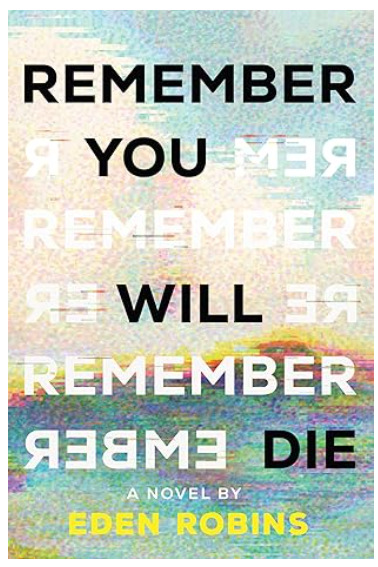
By Eden Robins. Sourcebooks Landmark.
Slate receives a commission when you purchase items using the links on this page.
Thank you for your support.
My personal death meditation tradition started when I stumbled across a documentary called Obit, about the New York Times’ obituary desk. In the documentary, I learned that most mornings when the obit writers came to work, they would receive a short brief about a deceased person, maybe with a few phone numbers of loved ones to call. They were expected to research, write, and file a complete obituary by the end of the workday. One day, one life.
There was something so poignant about this undertaking—of devoting a full day, but no more, to learning everything you could about a stranger and then having the sobering but glorious responsibility of narrating their life in print. It felt painful, but also heroic.
I’m not an obit writer, but I am a novelist. So I decided to write obituaries of fake people. I wrote one every day for months. My first obit was about a woman who died of neglect in a nursing home. This was not a conscious choice, but in retrospect was perhaps a way to process what my mother-in-law was going through. After writing this first obit, I became interested in a mention I had briefly made about a daughter the woman had placed for adoption. So the next day I wrote the daughter’s obit, which, in my fictional world, came many years later. For months, every day, I woke up and sat quietly until something sparked my interest, and then developed a life and death out of that interest. I thought deeply about who these people were, who loved them, what they loved. You never know the full narrative arc of your life until it’s over, and it was truly calming to look back on these imagined lives and write about what made them special. I had a vague idea that these stories might become a novel, but I didn’t plan anything in advance.
During meditation, we focus on our breath, bringing this autonomic and unconscious function into consciousness. Not to control the breath, but to participate in and witness it. That attention affects systems of the body that we can’t consciously access. In this way, meditation really is like a magic trick, a secret portal to your mysterious insides.
Without quite meaning to, by writing obituaries of imaginary people and giving myself access to grief in an emotionally safe way, I had created my own way of meditating on death. I had built a sandbox where I could be curious about my grief and fear without trying to control or be controlled by them. Fiction is its own kind of magic trick, a secret portal to the mysterious world.
And after weeks of writing fake obituaries, I found I could breathe more easily.
In the 1980s, psychologists developed “terror management theory,” which hypothesized that when faced with existential threats and reminders of our mortality, we tend to seek comfort in certainty, and become more polarized and aggressive in our opinions—of other cultures, religions, political ideals, and so on. There is some evidence that when we are reminded of our mortality, we will punish people we’ve decided are not like us. On the flip side, researchers have also observed that when faced with an existential threat, such as the pandemic, we may choose to channel this fear into acts of creation instead, opening ourselves up to curiosity and flexibility, and feeding a sense of purpose and connectivity in the face of uncertainty and death. So I added a third step to my equation—first we must see death, then we must accept it, and finally we can try to make something beautiful out of it.
It was January 2021—during peak chicken-breast-in-freezer anxiety, as well as the attack on the Capitol—when I started writing the daily obituaries that eventually became my new novel, Remember You Will Die, which comes out Oct. 22.
Remember You Will Die is told entirely through my linked obituaries (plus a few news briefs and other “found” documents, but no traditional narrative). I finished the final draft the day my mother-in-law died, in July 2023.
Her death, even though we knew it was imminent, was still shocking and awful. To mourn her, my husband and sister-in-law decided we would spend an evening watching her favorite movie (Murphy’s Romance) and cook a meal their mom used to make for them when they were kids, a family favorite: potato boats (no chicken involved).
Because of my by now extensive experience with fake obit writing, my husband asked me to help write his mother’s real one. I’m ashamed to say it became a task I dreaded and put off again and again. Somehow, knowing her personally made it so much harder to see her life from the helpful (and, well, fictional) distance that had allowed me to write the novel.
That obit, and my relationship to death, are still a work in progress. And so I’m not saying channeling my fears into writing this novel fixed my fear of death or made me triumph over grief. But by embarking on a gentle but persistent habit of seeing death, meditating on it, and making something creative out of my fear, I’ve started to develop a healthier relationship to the fact that we all die. We can’t escape death, but we can build a life that includes and respects it.
Source link