
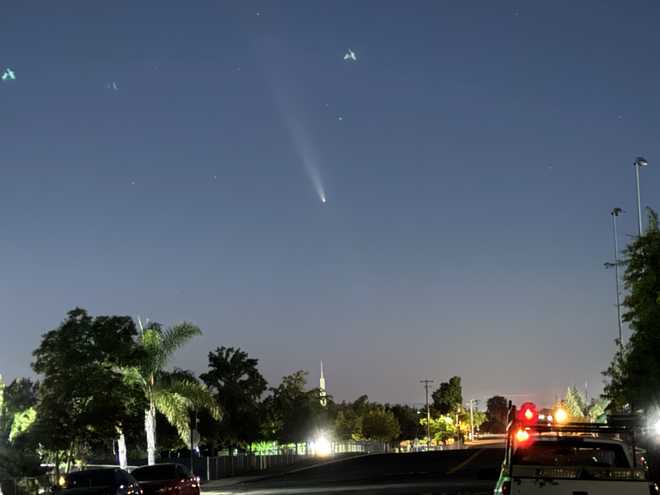
Comet Tsuchinshan-ATLAS as seen in California
Did you notice the comet? KCRA 3 viewers have been sending pictures of a flash in the sky to our newsroom which is a recently discovered comet.Comet C/2023 A3 Tsuchinshan-ATLAS made its perihelion, or closest transit past the Sun, on Sept. 27, according to NASA. It had been visible for those in the Southern Hemisphere since September and now is expected to be visible for those in the Northern Hemisphere through early November. When a comet approaches the Sun heat causes its ice to become a gas and dust tail that extends for millions of miles. A solar wind also creates another tail by stripping ion off the comet’s surface, according to NASA. The comet, which was only discovered in 2023, is believed to have originated in the Oort Cloud at the outer reach of our solar system. It was named after being observed by China’s Tsuchinshan Observatory and an Asteroid Terrestrial-impact Last Alert System, or ATLAS, telescope in South Africa.Scientists say you may catch a glimpse for the next few weeks by looking to the western sky after sunset. It can be seen with the naked eye, though binoculars are recommended. The comet won’t be visible from Earth again for another 80,000 years. It was last likely seen from Earth at the time of the Neanderthals, CNN reported.Below are photos of the comet as seen in Northern California. –CNN contributed to this story.
Did you notice the comet?
KCRA 3 viewers have been sending pictures of a flash in the sky to our newsroom which is a recently discovered comet.
Comet C/2023 A3 Tsuchinshan-ATLAS made its perihelion, or closest transit past the Sun, on Sept. 27, according to NASA. It had been visible for those in the Southern Hemisphere since September and now is expected to be visible for those in the Northern Hemisphere through early November.
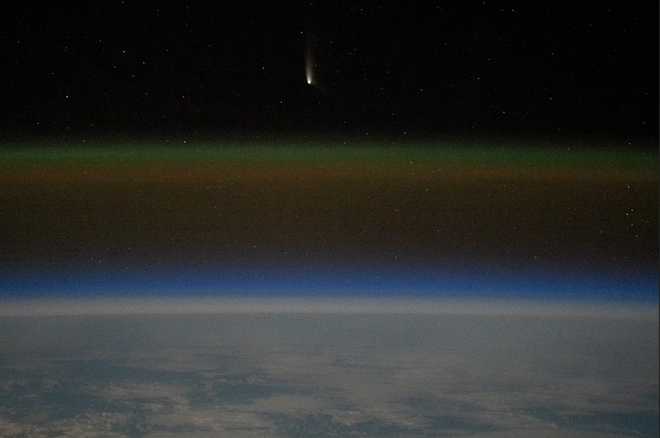
When a comet approaches the Sun heat causes its ice to become a gas and dust tail that extends for millions of miles. A solar wind also creates another tail by stripping ion off the comet’s surface, according to NASA.
The comet, which was only discovered in 2023, is believed to have originated in the Oort Cloud at the outer reach of our solar system. It was named after being observed by China’s Tsuchinshan Observatory and an Asteroid Terrestrial-impact Last Alert System, or ATLAS, telescope in South Africa.
Scientists say you may catch a glimpse for the next few weeks by looking to the western sky after sunset. It can be seen with the naked eye, though binoculars are recommended.
The comet won’t be visible from Earth again for another 80,000 years. It was last likely seen from Earth at the time of the Neanderthals, CNN reported.
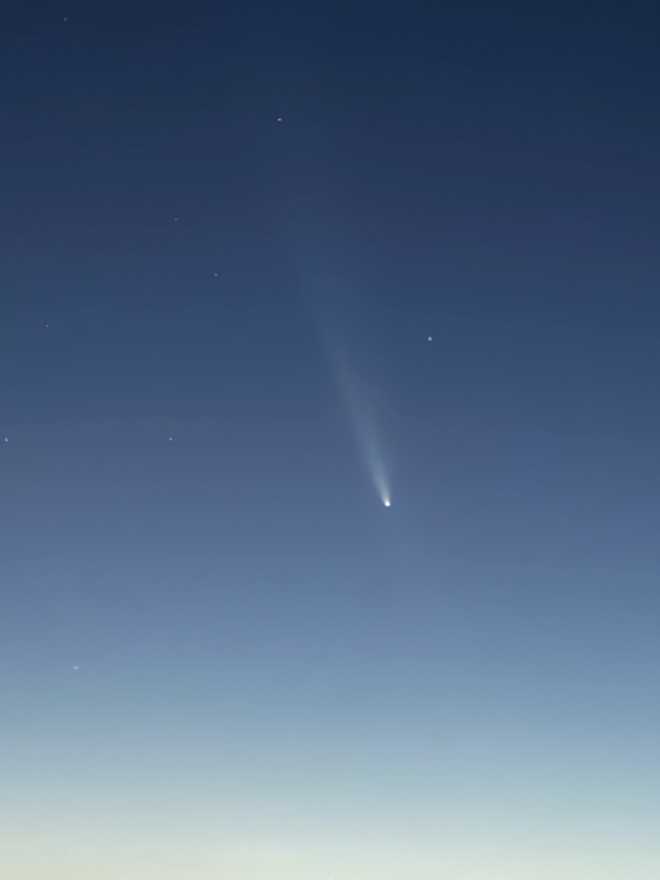
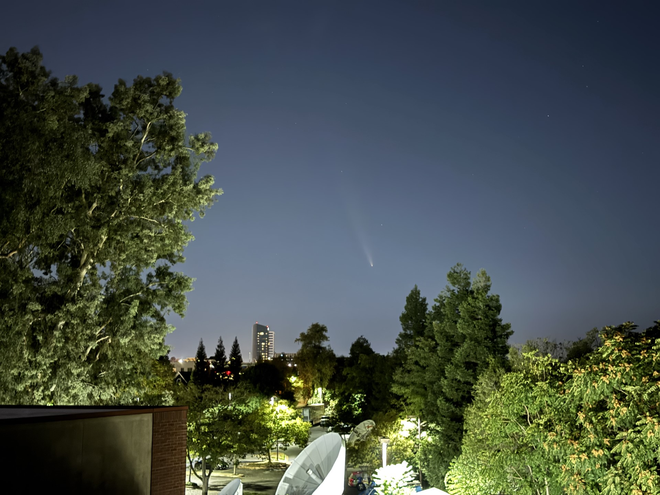
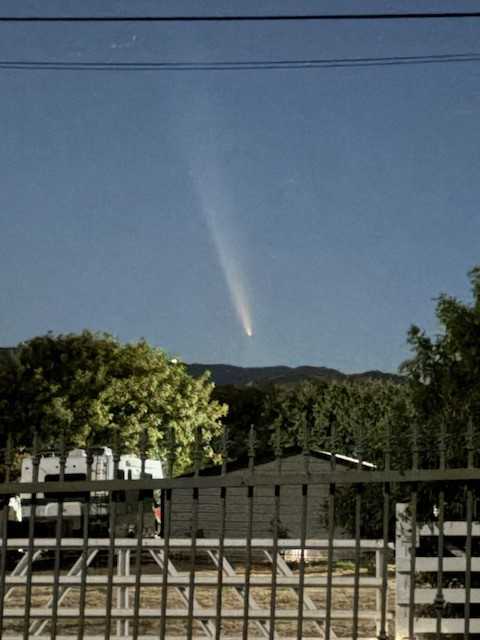
Below are photos of the comet as seen in Northern California.
–CNN contributed to this story.
Source link