
Comet passing the closest to Earth it’s been in 80,000 years
There’s a once in a, well, several lifetimes, chance to see a comet in the night skies this week.A recently discovered comet, known as C/2023 A3 Tsuchinshan–ATLAS, is making its closest approach to Earth in thousands of years.Sky-gazers won’t want to miss the event since it may be the last time the comet will be seen in the night sky for another 80,000 years.The comet has been visible to the naked eye with the right conditions since this weekend, but it is getting brighter each day leading up to this Saturday, Oct. 19, when it will be at its brightest.Some people across the Louisville area have already been spotting it. You can see some photos of it people have shared below.And here is an image of it taken in space from the National Aeronautics and Space Administration.Show us your photos! Upload them to ulocal.The good news is skies look like they’re going to be pretty clear from Tuesday all the way to its peak visibility Saturday.Your best chance to spot the comet and its radiant tail is during the two hours right after sunset.Since the comet is hanging around the sky at about 20 degrees above the horizon, the less trees, buildings and other obstructions you can find, the better your chances of seeing it will be.You’ll need to look toward the western sky just to the right of Venus. If you have a night sky mapping app, you can also find the star Arcturus because the comet should be situated right between Venus and Arcturus.If you can’t see it with your naked eye, you might want to break out your mobile phone’s camera and point it at the spot where the comet should be. Then, tap the screen to see if its light separating ability can get you an image of the comet.You can also use binoculars or a telescope to get a better view of Tsuchinshan-ATLAS and maybe even see some of the various colors in its antitail, the trail of dust left behind in the comet’s orbit. The comet successfully reached perihelion, its closest point to the sun in its orbital path around the parent star, on Sept. 27, and was visible for those in the Southern Hemisphere in September and early October. Now, the icy body is on its way out of the inner solar system and will be visible to those in the Northern Hemisphere in mid-October through early November, according to NASA.For those unable to see Tsuchinshan–ATLAS in the night sky, the Virtual Telescope Project in Italy will be hosting a live feed of the comet. You can check out when to see that here.
There’s a once in a, well, several lifetimes, chance to see a comet in the night skies this week.
A recently discovered comet, known as C/2023 A3 Tsuchinshan–ATLAS, is making its closest approach to Earth in thousands of years.
Sky-gazers won’t want to miss the event since it may be the last time the comet will be seen in the night sky for another 80,000 years.
The comet has been visible to the naked eye with the right conditions since this weekend, but it is getting brighter each day leading up to this Saturday, Oct. 19, when it will be at its brightest.
Some people across the Louisville area have already been spotting it. You can see some photos of it people have shared below.
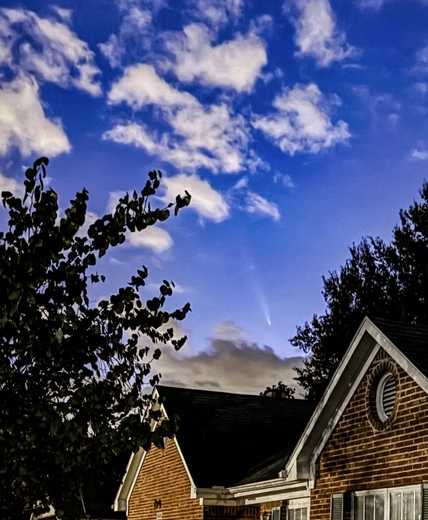
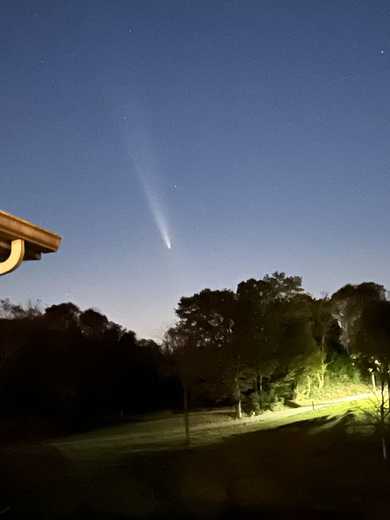
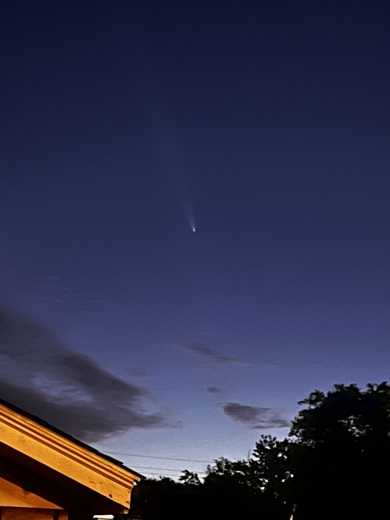
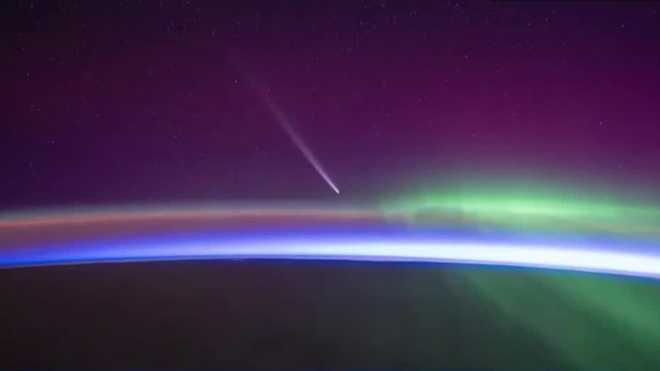
And here is an image of it taken in space from the National Aeronautics and Space Administration.
Show us your photos! Upload them to ulocal.
The good news is skies look like they’re going to be pretty clear from Tuesday all the way to its peak visibility Saturday.
Your best chance to spot the comet and its radiant tail is during the two hours right after sunset.
Since the comet is hanging around the sky at about 20 degrees above the horizon, the less trees, buildings and other obstructions you can find, the better your chances of seeing it will be.
You’ll need to look toward the western sky just to the right of Venus. If you have a night sky mapping app, you can also find the star Arcturus because the comet should be situated right between Venus and Arcturus.
If you can’t see it with your naked eye, you might want to break out your mobile phone’s camera and point it at the spot where the comet should be. Then, tap the screen to see if its light separating ability can get you an image of the comet.
You can also use binoculars or a telescope to get a better view of Tsuchinshan-ATLAS and maybe even see some of the various colors in its antitail, the trail of dust left behind in the comet’s orbit.
The comet successfully reached perihelion, its closest point to the sun in its orbital path around the parent star, on Sept. 27, and was visible for those in the Southern Hemisphere in September and early October.
Now, the icy body is on its way out of the inner solar system and will be visible to those in the Northern Hemisphere in mid-October through early November, according to NASA.
For those unable to see Tsuchinshan–ATLAS in the night sky, the Virtual Telescope Project in Italy will be hosting a live feed of the comet. You can check out when to see that here.
Source link