
NASA Uncovers Hidden Sulfur Crystals and Mysterious Rock Formations on Mars
NASA’s Curiosity Rover has made groundbreaking discoveries on Mars, uncovering mysterious spiderweb-like rock formations and hidden sulfur crystals. These finds, revealed during Curiosity’s exploration of the Gediz Vallis channel at the base of Mount Sharp, offer new insights into the planet’s geological and climatic history. The rover, which has been traversing the Martian surface since 2012, captured detailed panoramas of the region before setting off on its next mission to study a formation known as the boxwork.
These discoveries not only highlight the unique processes that shaped Mars’ surface but also provide valuable clues about the Red Planet’s past, particularly its transition from a wet environment to the arid landscape we see today.
The Mystery of Mars’ Spiderweb-Like Ridges
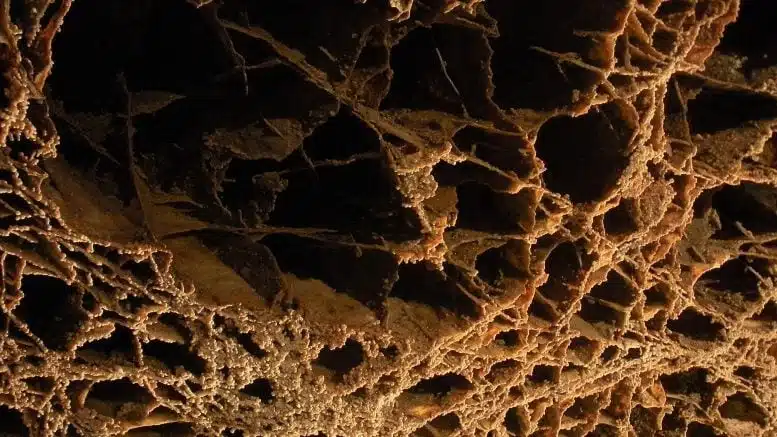
The boxwork formations Curiosity is set to explore next resemble spiderwebs stretching across the Martian terrain. NASA scientists believe these patterns were formed by minerals carried by the last remnants of water that flowed through Mount Sharp’s fractures. As the water dried up, the minerals hardened, leaving behind intricate, web-like structures.
On Earth, similar formations are found in caves and cliffs, but what makes Mars’ boxwork unique is its immense scale, spanning 6 to 12 miles (10 to 20 kilometers). Dr. Kirsten Siebach, a scientist from Rice University, explained the significance of these formations: “These ridges include minerals that crystallized underground, where it would have been warmer, with salty liquid water flowing through. Early Earth microbes could have survived in a similar environment. That makes this an exciting place to explore.”
By studying these structures, scientists hope to reconstruct Mars’ ancient climate and determine whether conditions were ever suitable for microbial life.
Traces of Ancient Water in Gediz Vallis Channel
Before heading to the boxwork formations, Curiosity spent over a year exploring the Gediz Vallis channel, capturing a 360-degree panorama of the region. This area is believed to have experienced late-stage water activity, offering a glimpse into the processes that occurred as Mars transitioned to a drier climate.
The channel contains evidence of rivers, debris flows, and even avalanches, all of which left their mark on the landscape. Scientists are now piecing together a timeline of these events to better understand how water shaped the Martian surface during its last stages of habitability.
The Discovery of Pure Sulfur Crystals
One of the most intriguing finds during Curiosity’s exploration was a sprawling field of sulfur stones, an unexpected discovery that NASA’s Mars Reconnaissance Orbiter had not detected in earlier images. These stones revealed yellow crystals when crushed by the rover, and further analysis confirmed that they were composed of pure sulfur—a material typically associated with volcanic or hydrothermal activity on Earth.

The team is still puzzled by how these stones formed, as no evidence of volcanic activity has been found in the region. Dr. Ashwin Vasavada, the Curiosity project scientist, described the discovery as an exciting challenge: “We’ve gathered a ton of data, and now we have a fun puzzle to solve.”
This finding opens new questions about the chemical and environmental processes that occurred on Mars long after its rivers and lakes dried up.
Source link