
Fossil Teeth From an 11-Year-Old Reveal Surprising Secrets About Human Childhood
A set of fossilised teeth from a young hominid, dated to approximately 1.77 million years ago, has sparked significant interest among scientists. Found at the Dmanisi site in Georgia, these teeth provide fresh evidence about the slow development of early humans’ childhoods. According to new research published in Nature, the teeth’s growth pattern may indicate that this extended life stage emerged earlier in human evolution than previously thought.
Clues in the Teeth of an Ancient Youth
The fossil teeth belonged to an 11-year-old individual from the genus Homo. Researchers discovered that during the early years of life, the teeth grew at a slower, human-like pace, similar to modern children. However, by the age of eight, their development shifted to resemble the faster growth patterns of great apes, such as chimpanzees. This mixed pattern suggests that the youth would have reached dental maturity by around 12 to 13.5 years of age.
Lead author Christoph Zollikofer, a paleoanthropologist at the University of Zurich, explains the importance of this extended childhood. Humans spend much of their early years growing up in a complex social environment, a period that allows for learning and adaptation. In comparison, great apes mature much faster and would, as Zollikofer puts it, “barely have time to go to kindergarten” before adulthood.
Technical Details of the Study
To analyse the ancient teeth, researchers employed advanced imaging techniques, including X-ray microtomography, which allows for detailed visualisation of internal tooth structures. This technology revealed growth lines in the molars, akin to tree rings, which recorded the individual’s developmental timeline.
- Slow initial growth: The teeth showed human-like development until around age four.
- Accelerated later growth: After age four, the teeth transitioned to a faster, ape-like pattern, with full dental maturity projected by 12–13.5 years.
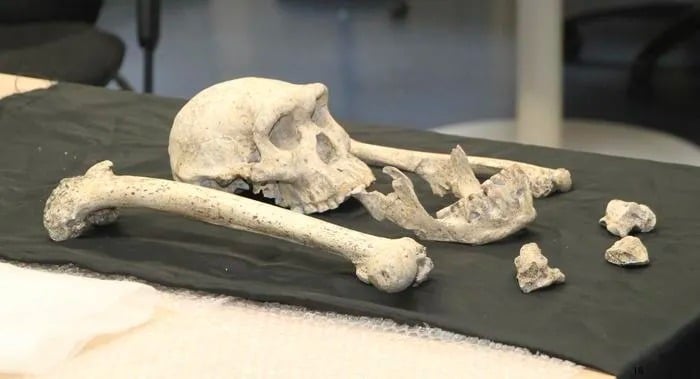
The teeth were part of a nearly complete skull uncovered in 2001. Their exceptional preservation allowed for a comprehensive reconstruction of the youth’s dental history, a first for ancient members of the Homo genus.
Why a Long Childhood Matters
This unique feature of human evolution has long puzzled scientists. A slow developmental pattern is often linked to the growth of larger brains, but this study suggests that the extended childhood may have appeared before the significant expansion of brain size.
Debbie Guatelli-Steinberg, a paleoanthropologist at Ohio State University, finds this connection “very exciting,” as it implies that early Homo species may have required more time to develop social skills before their brains reached their full potential.
Questions Remain
Although the study offers critical clues, experts caution against drawing definitive conclusions. Kevin Kuykendall, a paleoanthropologist at the University of Sheffield, notes that the slow dental development observed may not only be tied to brain size or social learning. Factors like diet or the age at weaning could also have played a role in shaping this evolutionary trait.
Guatelli-Steinberg points out that future studies, such as analysing chemical signatures in tooth enamel, could provide deeper insights into the evolution of humans’ prolonged childhood. For now, this discovery marks a significant step in understanding the origins of one of humankind’s defining characteristics.
This fascinating find reminds us that even the smallest aspects of our past—like fossilised teeth—can unlock profound truths about the journey of human evolution.
Source link