
Fossils of Dinosaur Vomit and Faeces Expose How they Evolved to Dominate Earth
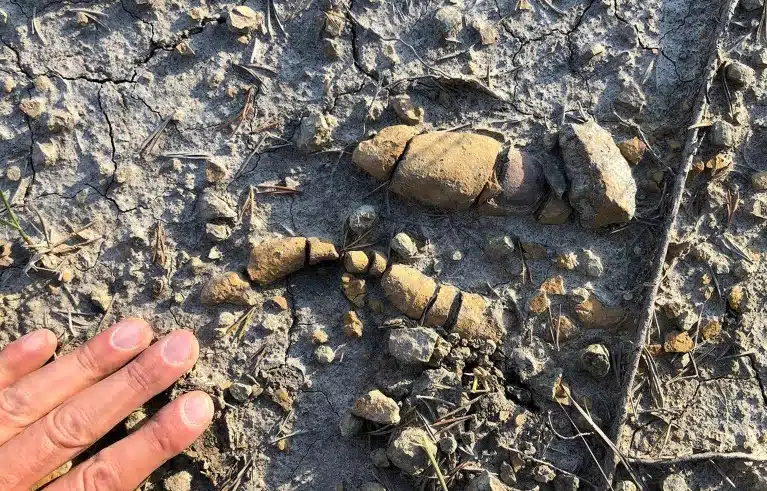
A revolutionary study published in Nature offers new insights into the rise of dinosaurs, revealing how their diet and adaptations helped them become the dominant species on Earth. By analyzing hundreds of fossilized pieces of digestive material—known as bromalites—researchers have reconstructed what dinosaurs ate and how their feeding habits evolved over millions of years. The study suggests that the dinosaurs’ dominance was influenced by a combination of random environmental changes and their evolutionary ability to adapt.
The Role of Bromalites in Understanding Dinosaur Diets
The research team, led by Martin Qvarnström from Uppsala University, examined over 500 pieces of bromalites from the Polish Basin in Central Europe. These fossils, estimated to be around 200 million years old, provided a glimpse into the dietary habits of early dinosaurs. Qvarnström explained that their work demonstrated that “you can use pretty seemingly unremarkable fossils to get pretty remarkable results.”
The team employed advanced techniques such as synchrotron microtomography—a method that uses a particle accelerator to peer inside the fossils—and chemical analysis to uncover the remains of fish, plants, and insects.
Despite the age and acidity of many of the fossils, the team was surprised by how well some insects were preserved. “Some of them were so beautifully preserved in three dimensions and with all the antennae and legs,” said Qvarnström. This level of preservation provided invaluable insights into the diets of the dinosaurs.
A Complex Path to Dominance
The study reveals that the rise of dinosaurs to dominance was a complex process. By analyzing the contents of the bromalites, the researchers found that the number and variety of food items in the dinosaurs’ diet increased over time. Larger dinosaurs with more diverse feeding habits began to dominate during the late Triassic period (approximately 237 to 201 million years ago).
By comparing these fossils with plant data from the same period, the researchers found that the rise of dinosaurs was shaped by a combination of chance events and adaptations. For example, increased humidity during the Triassic period led to changes in vegetation, which in turn affected the diet of dinosaurs. According to Qvarnström, “What we learnt was that the rise of dinosaurs, it took quite a long time, and it was really complex.”
Qvarnström emphasized that the rise of dinosaurs was influenced by more than just chance events, noting that “it was really complex,” and involved both evolutionary adaptation and environmental shifts.

New Insights into Dinosaur Evolution
This research marks a significant step forward in understanding how life on Earth responds to changing environmental pressures. Suresh Singh, a palaeoecologist at the University of Bristol, praised the study, calling it “an impressive piece of work.” He added that it was the first time he had seen bromalite-focused research applied on such a large scale.
Singh suggested that future studies could use bromalites to explore how dinosaurs evolved in different parts of the world. “Current studies suggest that dinosaurs evolved first in the Southern Hemisphere, and so maybe you have a different pattern happening down there,” he said.
Looking to the Future of Bromalite Research
The study’s findings highlight the importance of bromalites in understanding the diets and evolution of early dinosaurs. As Qvarnström noted, the research shows that even “seemingly unremarkable fossils” can provide “remarkable results.” This opens the door for further exploration into how ancient ecosystems functioned and how dinosaurs adapted to changing environments.
Source: Nature
Source link