
Local View: ‘Just silly old me, going through the pause’ – Duluth News Tribune
My girlfriend Laurie sighed. “Elephants have it easy,” she said. We are 50-year-old women, and she was referencing how elephants, unlike humans, do not go through menopause.
I imagine our conversation 25 years ago might’ve gone differently. “Elephants have it hard,” she would have said then. “They carry their babies for roughly 20 months. That’s a long pregnancy. Plus, they can get pregnant almost their entire adult life!”
Pick your poison, women.
Orcas, a few toothed whales (belugas, narwhal, and short-finned pilot), Ngogo chimpanzees, and humans are the only beings believed to experience menopause.
Menopause. Seriously? Should this not be called womenopause?
Despite how it feels, menopause is a non-pathological, natural, and permanent cessation of ovarian function. It has nothing to do with men, and there is no pause associated with it. Menopause results from the depletion of ovarian follicles, aka eggs.
Men continue to make sperm until they die. Actor Al Pacino, 83, fathered his fourth child last year. He was 53 years older than the mother. And yes, this was legal.
Conversely, women are born with a finite number of eggs for their entire lives. When a woman gets down to critical levels, her brain works harder to stimulate her ovary to secrete an egg, creating high levels of follicle stimulating hormone (FSH) and luteinizing hormone (LH) from the pituitary gland within the brain. (Thanks, brain, for never giving up on believing I am young enough to ovulate!) But the ovary knows best and gives up. Menopause ensues.
As a physician, I can measure blood levels of FSH and LH to confirm menopause.
Menopause is tough, for some more than others. Besides the loss of regular periods, menopause can cause weight gain, hot flashes, night sweats, thinning hair, loss of bone mass, anxiety, depression, loss of libido and concentration, vaginal dryness, and difficulty sleeping. If that weren’t enough, it sometimes causes joint, bone, and muscle aches and hormone imbalances that affect connective tissues, making women more vulnerable to injury, including frozen shoulder, sports injuries, and exercise fatigue.
Personally, my first menopausal clue was hearing a pulsatile whooshing in my ear. I thought I had become the narrator in Edgar Allan Poe’s “The Tell-Tale Heart.” It was maddening. I researched and discovered it may be a symptom of menopause. No dead man’s heartbeat, like Poe had written. Just silly old me, going through the ‘pause.
In 1991, the National Institutes of Health began studies to assess morbidity and mortality (sickness and death) in postmenopausal women. This study was called the Women’s Health Initiative Clinical Trial and the Women’s Health Initiative Observational Study, or WHI.
In 2002, the WHI found a link between hormone-replacement therapy and breast cancer risk, which caused a number of women to stop taking hormone-replacement therapy. Still, hormone-replacement therapy was often the only effective treatment for troubling menopausal symptoms.
More studies have since looked at the topic with a wider angle. The results have suggested the relationship between hormone-replacement therapy and breast cancer risk is more nuanced. In June 2017, the North American Menopause Society updated its guidelines on using hormone-replacement therapy, stating that for women younger than 60 or within 10 years of menopause who have no other medical reasons to avoid hormone-replacement therapy, the benefits outweigh the risks when treating menopausal symptoms.
It is extremely important to know that women who have a history of breast cancer should not take hormone-replacement therapy. I might add that any woman with a uterus should add progesterone replacement to estrogen therapy, to prevent endometrial hyperplasia (thickening of the uterus lining), which can lead to uterine cancer. So the whole decision of hormone therapy requires much thought on who and how and for how long. A good doctor can help.
Hormone therapy can alleviate menopause symptoms, improve bone health, and help skin, heart, and sexual health, especially if used short term (about five years). If you are suffering, I would encourage you to speak with your doctor about your options.
Finally, I must ask the big question: Why do we go through menopause at all? What need is there for orcas, a few toothed whales, Ngogo chimpanzees, and women to have this condition? Is it our time to give up fertility so we can focus on the next generation, also known as the adaptive grandmother theory? Or is it somehow more of an evolutionary adaptation? In other words, does the continuation of the species benefit by leaving fertility to the young? If so, why do we not die sooner, like most other non-menopausal beings? (Thank God we don’t!) Like with many of my questions, we don’t really know the answers.
Regarding elephants, I would have to agree with the younger Laurie and not the older one. We are lucky we are not elephants, who do not live much past fertility. We enjoy the benefits of a nonfertile phase, like youth, but inside out. Humans can enjoy many years of life beyond fertility. Because, even though our days of having babies are over, and menopause may be in full swing, there still is a lot of good living to do!
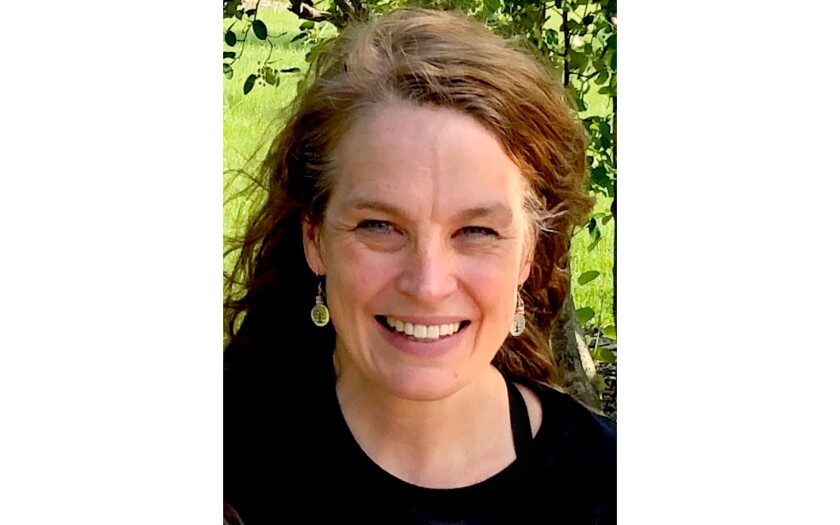
Krisa Keute of Duluth is a physician; professor at the University of Minnesota Medical School, Duluth Campus; mother; daughter; and sister who practices internal medicine. She is a contributor to the News Tribune Opinion page.
Source link