
270-million-year-old saber-toothed ‘dog-like’ fossil found in Spain
Researchers in Spain found the oldest therapsid on record and with saber-toothed teeth. Mammals are the last surviving members of this ancient group, so this “dog-like” relative is changing what they thought they knew about this therapsid and giving them new insights into where we come from.
Discovered on the Spanish island of Mallorca, the fossil might not have a species name yet as it was just discovered. However, researchers have identified when it lived and to which group classification it belongs.
As a member of the gorgonopsians, they’re “more closely related to mammals than they are to any other living animals,” says Ken Angielczyk, co-author of a recently published paper and the Field Museum’s MacArthur Curator of Paleomammalogy in the Negaunee Integrative Research Center. “While they’re not our direct ancestors, they’re related to the species that were our direct ancestors,” he continues in a press release.
The “dog-like” animal lived 270-250 million years ago before the age of the dinosaurs. It is “most likely the oldest gorgonopsian on the planet,” says Josep Fortuny, senior author of the article and head of the Computational Biomechanics and Evolution of Life History group at the Institut Català de Paleontologia Miquel Crusafont (ICP) in Spain. They not only identified a new animal but the most ancient of its kind in an unlikely location.
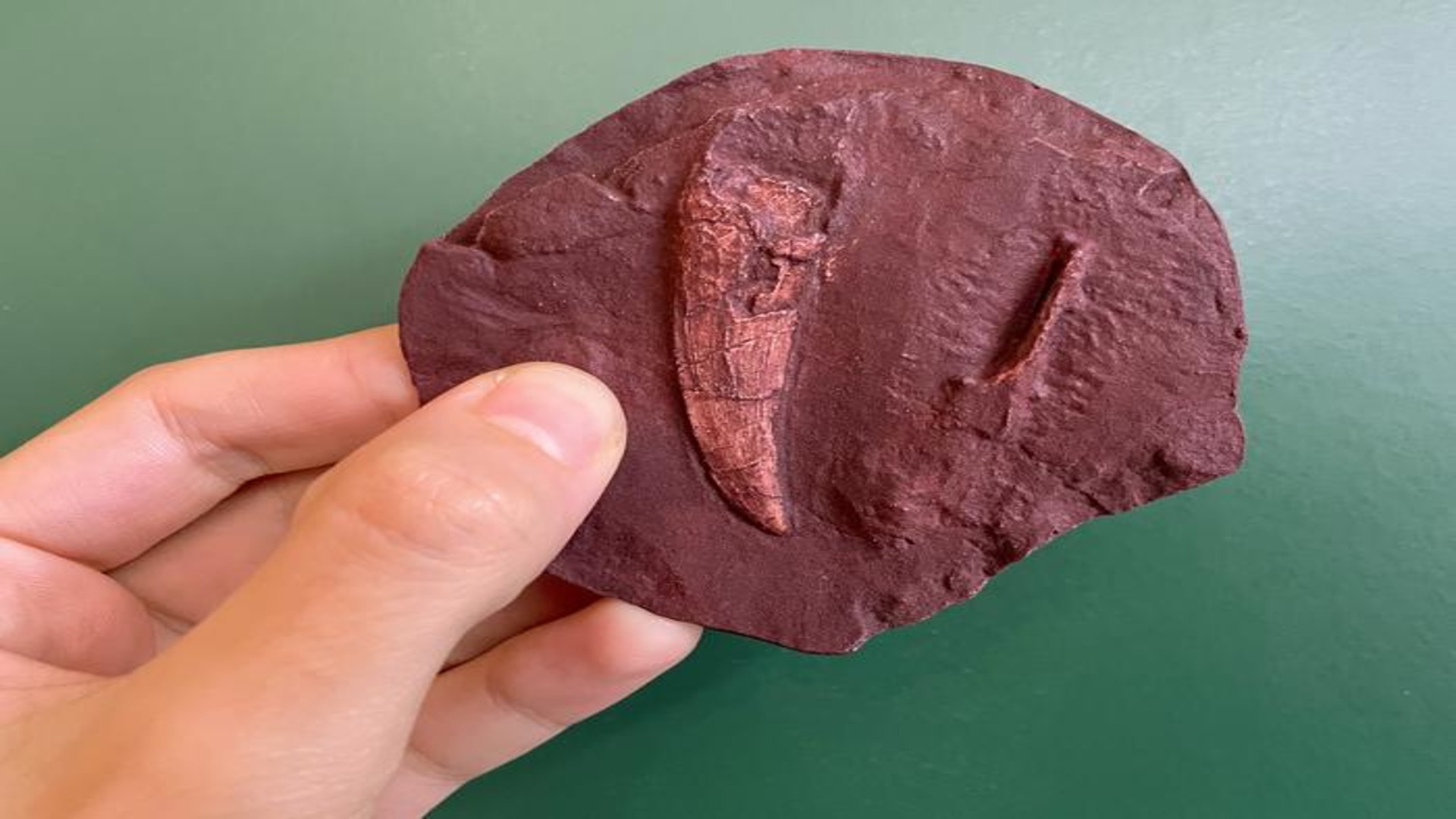
Furless, dog-like distant relative of the mammal
Researchers never anticipated finding the “top predator of its day” on the Balearic Islands, as the remains of gorgonopsians typically surface at very high latitudes, such as in Russia or South Africa. During three different campaigns, however, they uncovered a surprisingly large number of gorgonopsians bones in the municipality of Banyalbufar.
“We have found everything from fragments of skull, vertebrae, and ribs to a very well-preserved femur,” explains Rafel Matamales, curator of the Museu Balear de Ciències Naturals (MUCBO | MBCN) and research associate at the Institut Català de Paleontologia Miquel Crusafont (ICP), and first author of the article in a press release.
With the wealth of bones uncovered, they reconstructed what the animal looked like. “If you saw this animal walking down the street, it would look a little bit like a medium-sized dog…It didn’t have any fur, and it wouldn’t have had dog-like ears,” says Angielczyk. “But it’s the oldest animal scientists have ever found with long, blade-like canine teeth.”
Additionally, a nearly complete leg even enabled researchers to study how the animal moved. It seemed to exist between a reptile and a mammal as their legs, in contrast to reptiles, were positioned more vertically, which was more efficient. The saber teeth confirmed that it was a carnivorous animal, a shared trait between all gorgonopsians.
“The saber teeth are a common feature in large predators of ecosystems, and what we have found was likely one in the environment in which it lived,” adds Àngel Galobart, researchers at the ICP and director of the Museu de la Conca Dellà.
10 million years older than its closest relatives
Most significantly, the unnamed gorgonopsian predates its closest relatives by tens of millions of years.
“Before the time of dinosaurs, there was an age of ancient mammal relatives. Most of those ancient mammal relatives looked really different from what we think of mammals looking like today,” says Angielczyk.
“But they were really diverse and played lots of different ecological roles. The discovery of this new fossil is another piece of the puzzle for how mammals evolved,” concludes Angielczyk in a press release.
Source link